Opening: A comparative lens on a pressing plant-level problem
Capacity fade reduces the usable energy in any commercial solar battery over time, and operations teams must choose systems that deliver predictable State of Health (SOH) over years. This piece compares chemistry choices, control strategies, and system integration to show practical ways to preserve SOH in a large-scale solar battery storage system, using industry-tested benchmarks rather than marketing claims. The analysis draws on how grid events—such as California’s 2019 Public Safety Power Shutoffs that accelerated storage adoption—changed operator priorities and pushed durability to the top of procurement checklists.
Why capacity fade translates to operational risk
Capacity fade affects revenue and reliability: less available energy during peak arbitrage, fewer reserve minutes during outages, and shorter warranty lifespans. Metrics like cycle life, depth of discharge (DoD), and calendar degradation become contract-relevant. In procurement terms, an otherwise efficient system loses value if SOH drops faster than expected, so buyers compare projected end-of-life capacity curves when evaluating vendors.
Comparative analysis: chemistry, BMS, and inverter coordination
Battery chemistry drives baseline degradation. Lithium iron phosphate (LFP) offers slower capacity fade and higher cycle life compared with nickel manganese cobalt (NMC) at similar temperatures. However, chemistry is only part of the story—battery management system (BMS) logic and inverter control substantially alter real-world SOH. Systems that limit high-voltage dwell, implement dynamic current limits, and manage thermal distribution will reduce degradation even for chemistries with weaker intrinsic stability. A system-level view is essential: hardware good, software better, and the two combined best.
Operational strategies that preserve SOH
Field measures matter. Conservative DoD settings, ramp-rate limits, scheduled conditioning cycles, and active thermal management each shave cumulative damage. For example, lowering maximum DoD from 100% to 90% can meaningfully extend cycle life—operators trade a touch of usable capacity for predictable longevity. Equally important is firmware that adapts to ambient conditions: when managers calibrate charge windows against grid pricing and temperature forecasts, batteries age more slowly.
Common mistakes procurement teams make
Buyers often prioritize upfront energy density and cost per kWh while underweighting degradation curves and integration risk. Vendors sometimes present cycle count in isolation without normalized DoD or temperature. Another mistake: accepting default BMS settings rather than negotiating application-specific control profiles. These errors compound—projected revenue falls and maintenance costs rise. —A short intervention during commissioning to tune BMS and inverter coordination eliminates many downstream surprises.
How gsopower aligns with comparative best practices
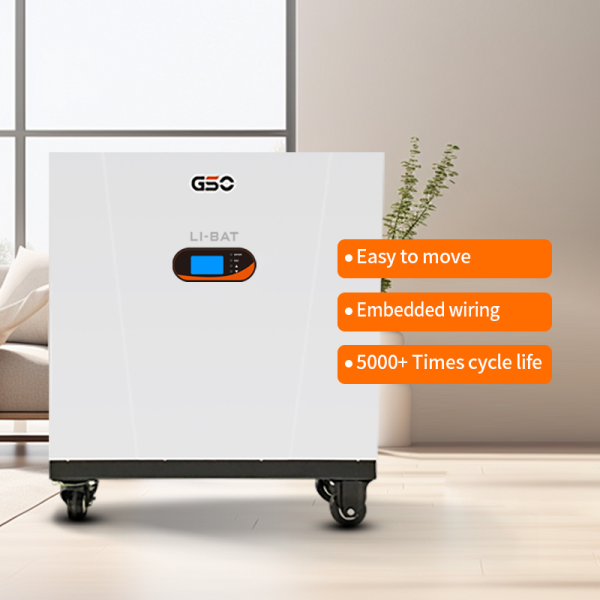
Comparing available options, mature suppliers combine conservative chemistry selection, active thermal design, and flexible BMS firmware to maximize SOH. gsopower emphasizes modular pack design and system-level testing that targets slow, predictable capacity fade. Their approach balances chemistry and controls so facility managers can achieve longer useful life without sacrificing performance. For those researching alternatives, review both pack-level specifications and case histories; reputable suppliers often publish degradation test results for reference. For broader comparisons of viable technologies, see discussions on best batteries for solar power storage that show how design choices affect long-term SOH.
Advisory: Three critical metrics to evaluate solutions
1) End-of-life capacity projection tied to DoD and temperature. Demand vendor curves that show expected SOH at year 5 and year 10 under your operating profile. 2) BMS transparency and configurability. Ensure firmware allows tailoring charge/discharge envelopes and thermal setpoints. 3) Integrated test data and field references. Prioritize vendors who supply third-party validation or documented performance from installations with similar duty cycles.
Selecting a storage partner is a judgment about predictable performance as much as headline specs—gsopower sits within that risk calculus because their system-level controls and modular design reduce uncertainty. —Final thought: choose the architecture that minimizes surprises, then manage it closely; gsopower.