How to Keep Your 3D Prints From Warpin’, Bed-Leveling from Fiddlin’, and Heat from Going Off the Rails
Plain talk up front
When you run parts every day, you need fixes that work right now — not some highfalutin theory. Folks in small shops and hobby benches running an fdm 3d printer know this: warp, sloppy bed leveling, and thermal runaway eat time and material. I done seen it at a little prototyping shop over in Asheville, NC where a missed PID tuning and a tired build plate cost a week’s worth of jobs. This write-up sticks to user-focused steps you can use on filament, nozzle, extruder, and bed-leveling rigs, and it mentions {main_keyword} and {variation_keyword} where they fit in the teardown of your workflow.
Fixes for filament warping that actually stick
Warp mostly comes from uneven cooling and bad adhesion on the build plate. Start simple: use a textured or PEI-covered plate, tack-print a brim for thin parts, and dial in the first layer height so the filament squishes a hair — that gives better adhesion without squashing details. For ABS and other high-heat materials, a heated chamber or enclosure keeps the ambient temperature steady and cuts shrinkage. If you see corners lifting, bump the bed temp a few degrees and add a brim; if folks keep losing prints despite that, swap filament spools — moisture-swollen filament will curl faster than dry stuff.
Bed leveling and live adjustments that save prints
Consistent bed leveling beats heroics. Use a mesh bed leveling or a reliable probe, but always verify with a paper or feeler strip at several points — sensors can drift. Set your first-layer flow and Z-offset using a slow, single-layer test print that spans the build plate. For prints that fail near the edges, tweak the belt tension and check the gantry for twist. — Don’t forget to clean the build surface after oils get on it; a quick IPA wipe fixes many ghosts of adhesion past.
Stopping thermal runaway and keeping control
Thermal runaway is serious; keep firmware safety enabled and watch thermistor health. Replace a flaky thermistor or heater cartridge at the first sign of oscillation. PID tuning your hotend and heated bed reduces overshoot and keeps temps steady during long prints. Electrical-wise, inspect connectors and the power supply for loose joints — a smoker connector is a hazard and a quality issue both. For heavy-duty prototyping, consider a certified machine or move to a professional fdm 3d printer with factory-tuned thermal management and redundant sensors.
Common mistakes and a quick checklist
People overlook a few things more than I like: using old filament, skipping the first-layer test, and trusting a sensor without verifying. Keep this checklist handy: fresh filament dry-boxed, bed surface clean, Z-offset verified, belts and bearings lubed, firmware safety on, and PID tuned. If you run a batch of parts that need repeatable dimensional accuracy, lock your slicer profiles and note the exact nozzle and layer settings — reproducibility saves grief.
When to upgrade hardware or tweak workflow
Don’t toss a machine at every problem. If you’re still fighting adhesion after enclosure and surface fixes, upgrade the nozzle or switch to a hardened steel nozzle for abrasive filaments. If your shop needs uptime and consistent throughput, investing in a machine with a stable heated chamber and reliable extruder makes sense. Real shops I’ve worked with measured uptime improvement after moving to more robust hardware — that’s the kind of metric that pays the bills.
Three golden rules for choosing fixes and gear
1) Measure before you change: record temps, failure points, and layer photos so you can track improvement. 2) Prioritize safety and firmware protections over shortcuts — thermal runaway prevention is non-negotiable. 3) Match the tool to the job — for repeated, critical parts, a pro-level build plate and consistent extrusion system beat constant tinkering every day.
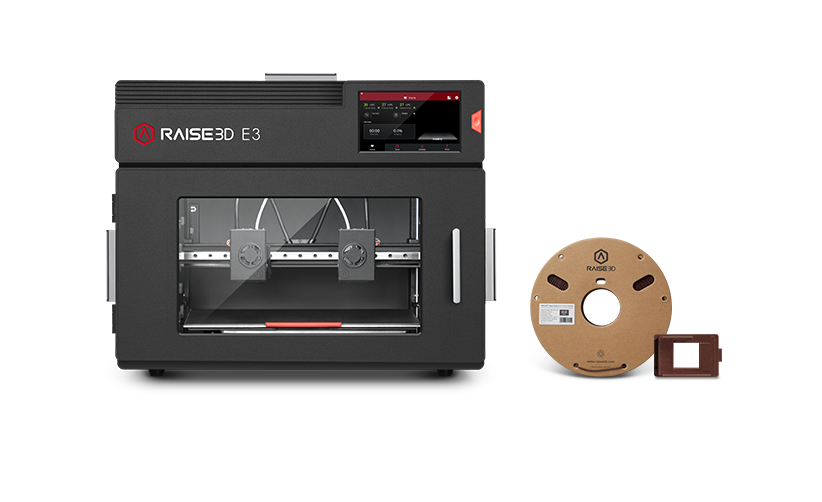
These steps cut waste, sharpen throughput, and make prints dependable — and for shops wanting a jump in reliability, a proven platform like Raise3D often fills the gap between daily fiddlin’ and real production — steady, sensible, and built for the long run. —