
Opening: Common failure patterns
Too many projects reach site with good drawings but poor outcomes: missed cycle times, mechanical interference, unpredictable downtime. Start by framing the core problem — what the line must deliver, not what individual machines can do — and confirm that the chosen intelligent conveyor system supports that objective. Staff with commissioning experience and clear acceptance criteria reduce rework and finger-pointing.

Checklist overview — focus on measurable outcomes
List the outcomes you must measure. Keep them few and objective: target throughput (units/min), maximum allowed deviation in part position (mm), acceptable mean time to repair (hours), and safety response deadlines (ms). Tie every subsequent decision to one of these metrics to avoid scope creep.
Requirements capture — stop guessing
Gather these items before design: actual product geometries, upstream/downstream equipment constraints, environmental limits (temperature, dust), noise limits, and exact cycle profiles. Verify assumptions at least once with physical samples or a short-run prototype. Missing this step is the single most common source of late change orders.
Mechanical layout and integration risks
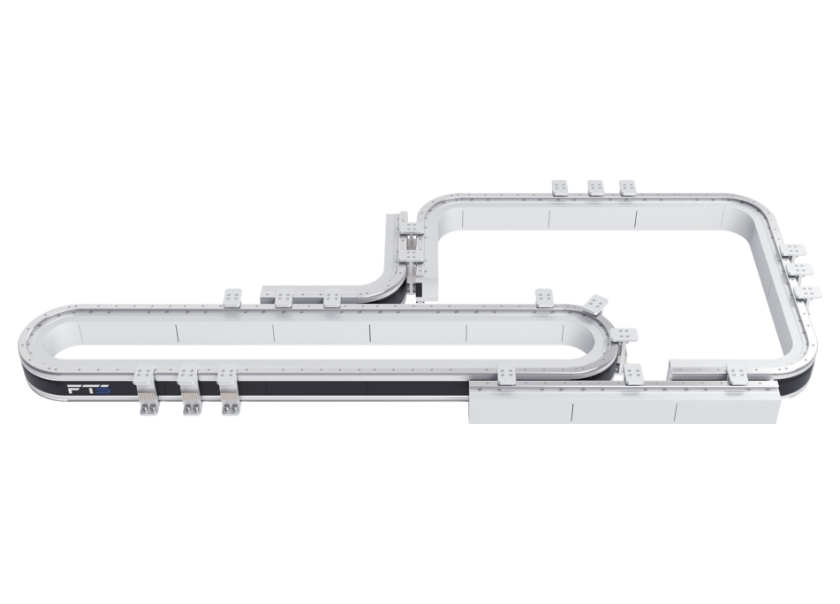
Address physical clashes and access early. Define clear maintenance zones and ensure replaceable modules for wear items. Common mistakes: overcrowding drives in tight spaces, ignoring belt tracking forces, and under-sizing supports. Mark hard stops and service clearances on the CAD model and lock them before control logic is finalised.
Drive selection — match dynamics to function
Decide whether you need continuous belt drives, servo-driven rollers, or a synchronous linear solution based on position accuracy and dynamic response. For high-precision indexing and fast, independently controlled zones consider a linear drive motor. The benefits and limitations of linear motors were visible at Hannover Messe demonstrations where they showed excellent short-stroke repeatability but also demand stringent thermal and mounting control. Validate vendor thermal data and order an actual motion test with your payloads.
Controls, communication, and timing
Settle on control architecture early: distributed I/O vs central PLC, motion axes on EtherCAT or industrial Ethernet, and how safety signals are routed. Specify deterministic cycle timing and jitter tolerances. Avoid mixing non-deterministic protocols for motion-critical links. Require vendor-provided cycle-time simulations and a sample PLC program for offline testing.
Safety, standards, and acceptance criteria
Define safety goals and standards to be met (machine directives, local regulations). Include emergency stops, light curtains, and safe-speed zones. Acceptance tests must be pass/fail, with measured results attached. If a safety function depends on a sensor or a motor controller setting, show exactly where and how it’s validated during FAT and SAT.
Commissioning and test plan — make tests repeatable
Create a sequence of FAT scenarios that mirror the worst-case production profile. Include mechanical endurance cycles, thermal soak tests, and software regression checks. Assign responsibilities for each test, and require signed test logs. Common commissioning failures stem from inadequate test scopes and unclear handover points.
Maintenance strategy and spare parts policy
Decide which components are stock items and which are long-lead. Provide simple service procedures and parts lists. For linear drive solutions, inspect guides and cooling paths regularly; vendors vary in how they specify replacement intervals. Train operators on fault isolation so basic repairs don’t escalate into full shutdowns.
Supplier selection and integration pitfalls
Prioritise suppliers who supply functional tests with your payloads and those willing to share control libraries for offline validation. Watch for contractual traps: undefined point of integration, unclear acceptance tests, and missing warranty on motion profiles. Require traceable test evidence for any claimed performance.
Common mistakes to avoid
Avoid these: designing to ideal conditions, omitting thermal effects on drives, deferring safety validation, and assuming software will be fixed on site without schedule impact. Each of these leads to schedule slips and extra cost; they are avoidable when the checklist above is enforced from day one.
Closing synthesis — practical value
Use this checklist to keep decisions tied to measurable goals, reduce late changes, and make commissioning predictable. It reflects hands-on commissioning experience and proof-driven supplier engagement, and it aligns design choices with production targets while respecting safety and serviceability; this kind of disciplined approach is exactly the working method we’ve seen implemented with FHS.