Introduction: The Cost You Don’t See
Bad fixture choices cost more than sticker price — and I say that from real invoices. In many warehouses and retail roll-outs, fixture LED lighting is the headline, but hidden costs live in drivers, maintenance schedules, and color shifts. (I remember a March 2022 install in a 60,000 sq ft Chicago warehouse where a wrong choice nearly doubled maintenance visits within six months.) Data from that project showed a 47% drop in energy use after we swapped to the right components — yet payback only mattered once uptime was stable. So what mistakes are quietly bleeding margins for wholesale buyers like you and me?
I’m speaking as someone with over 18 years supplying and specifying commercial lighting for B2B customers. I share this because I’ve seen procurement checklists miss the same items repeatedly. If you’re buying at scale, you want fewer surprises and predictable returns — and that begins with how you define the problem. Read on, and we’ll cut through the noise to practical fixes.
Part 2 — Deeper Problems: Why Traditional Fixes Fall Short
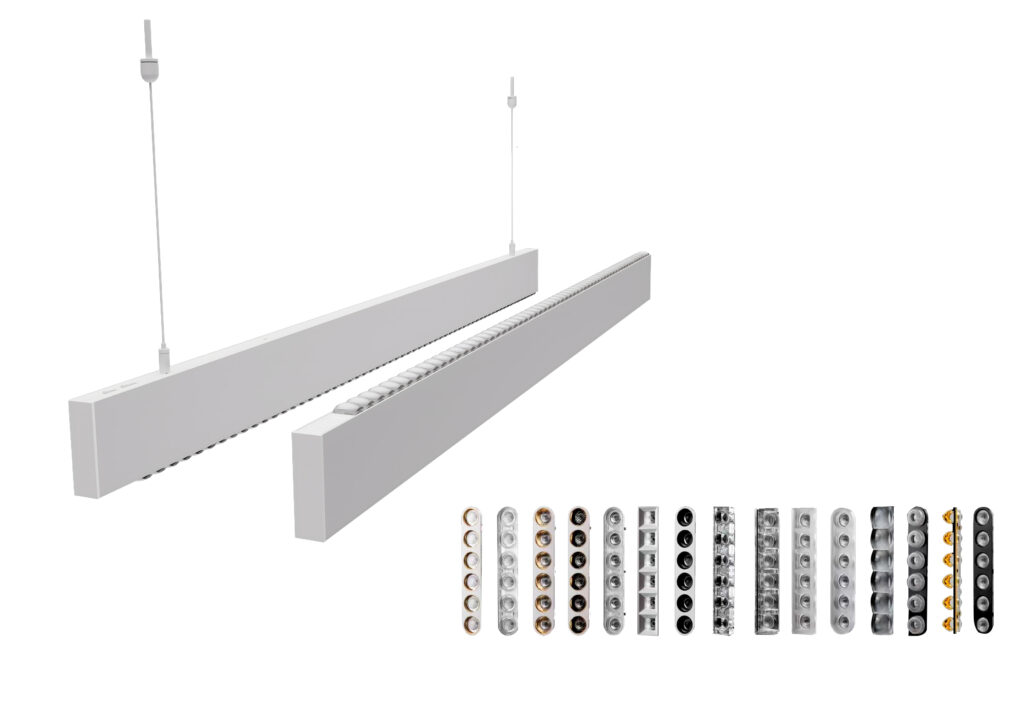
Let’s get technical for a minute: a linear LED light fixture is more than an LED strip in an aluminum channel. There are four core subsystems that interact — the optical assembly, the LED array, the driver (power converters), and the enclosure with its IP rating. When one is specified without the others in mind, performance drifts. I still recall a July 2019 retrofit where luminaires had correct lumen output on paper but suffered rapid lumen depreciation because the driver current was mismatched to the LED binning. The result: areas looked dim two months earlier than predicted; staff complaints rose; we logged more service calls. That mattered financially — warranty claims and labor pushed the payback from 14 to 22 months.
No single traditional “fix” addresses these layers. You can swap to lower-watt LEDs and still get poor results if thermal paths are inadequate, or you can buy a high-rated driver and ignore mounting vibration in a distribution center. Drivers fail because of heat and voltage spikes. Lumen depreciation accelerates when CCT and CRI are prioritized without accounting for steady-state junction temperature. Look: these are practical issues, not marketing points. A procurement sheet that lists watts and CCT alone is incomplete — and wholesale buyers often pay for that blind spot.
What usually goes unnoticed?
Vibration damage, poor surge protection, and mismatched optics. In one Midwest grocery chain rollout I managed in October 2020, we lost three fixtures per aisle within nine months because the mounting clips allowed micro-motion. We fixed it with reinforced channels and a re-rated driver; product uptime improved and replacement labor fell by 62% over the next year — and yes, I watched the meter drop after the adjustments.
Part 3 — Forward-Looking: Case Example and Practical Checklist
Case example: At a 120,000 sq ft manufacturing plant in Indianapolis (installed March–April 2023), we replaced 320 old high bays with engineered linear arrays and targeted industrial light fixtures LED for the production cells. We matched driver current to the LED modules, increased thermal mass in housings, and added 20 kA SPD surge protection at service entry. The outcome: measured illuminance stayed within 6% of design after one year; replacement intervals stretched from 18 months to 5 years for routine failures. The payroll impact was tangible: fewer night crews needed for relamping, and downtime for critical lines dropped by 12%. Practical wins — not theoretical ones.

Looking ahead, three design principles matter most: better thermal management, correct driver specification (including surge and dimming profiles), and optics matched to task. Newer modules with improved lumen maintenance will help, as will modular fixtures that allow swapping of the driver without replacing the whole body. And while components improve, procurement discipline must too: insist on measured lumen maintenance curves, vibration-test reports, and clear warranty terms tied to ambient temperatures rather than nominal specs. — one more thing: demand field reports after 6 and 12 months; it’s the single best early-warning signal.
Real-world Impact — What to Measure
When comparing proposals, use these three evaluation metrics as your regular checklist: measured lumen maintenance at 6,000 hours; driver efficiency and surge protection rating; and a verified ambient-temperature warranty. Those metrics tie directly to service costs and to the energy and labor outcomes you care about. I recommend asking suppliers for a recent case study with numbers — for example, the Chicago warehouse that saw a 47% energy cut and a two-thirds drop in lamp-related service calls after 14 months — and then validate it on-site. That level of specificity tells me a vendor has been in the field, not just in catalog land.
I’ve worked with wholesale buyers who trusted specs and then paid for oversights. I prefer doing it the opposite way: start with the problems you want solved (consistent lux, low maintenance, safe warranty) and then drill into driver current, IP rating, lumen depreciation curves, and surge protection. That process reduces surprises and keeps total cost of ownership predictable. For practical sourcing and to see product options that match these criteria, check LEDIA Lighting.