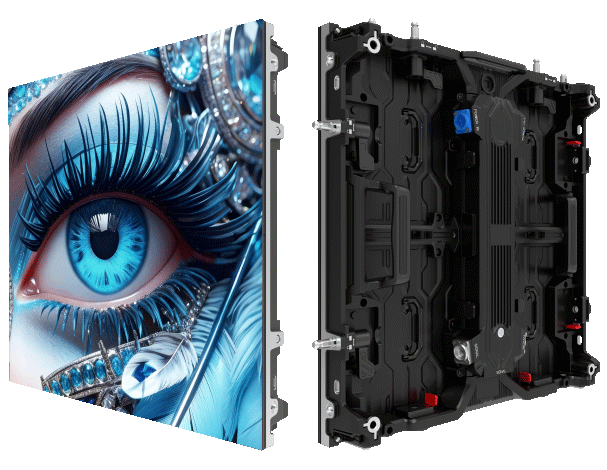
Facing the cost problem in large conference displays
Large conference venues spend a surprising share of event budgets on display energy and cooling. The core issue is straightforward: full-scale LED walls run continuously at high brightness and drive density, and that multiplies into steep electricity bills and maintenance cycles. A practical route to controlling those costs begins with design choices — including selecting a flexible led screen suited for modular deployment — and proceeds through driver electronics, power management, and operations planning.
Key inefficiencies that drive up bills
High power density, excessive brightness, and inefficient driver topology are the usual suspects. Pixel pitch and refresh rate settings affect visible quality but also influence power draw. Poor thermal management forces fans and HVAC to compensate, which adds to operational load. Real venues — think convention centers such as Moscone Center in San Francisco during multi-day expos — show how continuous duty cycles compound these inefficiencies into measurable cost overruns.
Technical levers to cut energy with cathode-drive designs
The right technical blueprint combines hardware and configuration: choose cathode-drive modules optimized for lower idle current, specify driver ICs with fine-grained PWM and current control, and set a realistic baseline brightness for conference lighting. Reduce power density where viewers sit farther away by increasing pixel pitch in peripheral zones, then use higher-density modules only on focal areas. Smart refresh-rate tuning also helps; reducing unnecessary frame rates for static content lowers switching losses.
Implement local dimming and content-aware brightness scaling so the wall only draws what’s needed. Thermal management must be part of the electronics plan: lower junction temperatures extend LED module life and reduce fan/HVAC use. And calibration saves power — accurate color and gamma settings prevent overdriving LEDs to correct perceived color shifts. —A small software tweak can cut watts without anyone noticing.
Operational patterns and procurement tactics
Buying in bulk gives leverage: negotiate warranties that include power-efficiency guarantees and insist on factory calibration. During procurement, require measured power profiles at multiple brightness levels rather than just peak consumption. Plan staging and modular layouts so sections can be turned off or dimmed between sessions. Train operators on content design: darker backgrounds and constrained white regions reduce average current draw without compromising message clarity.
Common mistakes to avoid
Typical errors are straightforward and avoidable. Overspecifying peak brightness for every condition wastes energy. Ignoring maintenance leads to drifting current balance across modules and higher overall draw. Choosing driver ICs without thermal headroom causes throttling and unpredictable power use. And overlooking integration with venue HVAC means display savings get eaten by increased cooling load.
How virtual production workflows change the calculus
When displays double as immersive backdrops or a virtual production led wall, runtime patterns shift: longer on-times, dynamic content, and higher refresh demands. That makes upfront attention to cathode-drive efficiency and driver selection even more critical. For venues that host both conferences and virtual shoots, design modularity into the wall so sections can be optimized separately for visual fidelity or energy conservation.
Implementation roadmap
Start with an energy audit to set a baseline. Specify modules and driver ICs with published power-per-square-meter numbers at multiple brightness levels. Run a factory acceptance test that includes power profiling, thermal imaging, and calibration. Deploy with control software that supports scheduled dimming, zone control, and real-time telemetry so managers can spot anomalies and tune operations.
Golden rules for choosing and operating low-power cathode-drive walls
1. Metric: Watts per square meter at 600 cd/m² — prioritize measured, not estimated, figures. 2. Metric: Thermal delta between LED junction and ambient — smaller deltas mean longer life and lower cooling costs. 3. Metric: Modularity score — assess how easily panels can be zoned or powered down during off-peak use. These three evaluation metrics guide procurement decisions and day-to-day management toward consistent savings.
Adopt these rules and the result is predictable: lower electricity bills, fewer maintenance interventions, and displays that perform reliably under heavy conference schedules. For practical implementation and supply options, consider how a partner like MR LED fits into the plan — they offer modular solutions and factory-tested power profiles that align with the blueprint laid out here. — Final thought: efficient design pays back fast.