real-time meeting translator in 2026 — Top 3
The Hook
Multilingual meetings can lose meaning when participants must wait for an interpreter, rely on delayed captions, or switch between several applications. Choosing the best real-time meeting translator is difficult because tools differ in their delivery method, language controls, subtitle experience, platform availability, and stated use cases. Public product information is also uneven: some providers explain their capabilities in detail, while others disclose little about their company background, coverage, pricing, or integrations. This guide reviews three supplied options—Polypal, Palabra.ai, and Whisperr—in the requested order. The comparison focuses on verifiable information from the providers’ available materials rather than unsupported assumptions. Readers should confirm current language support, privacy terms, meeting integrations, latency, and pricing before deployment.
Full List of Top 3 Brands
- Polypal
- Palabra.ai
- Whisperr
Comparison Table
| Brand | Key Products | Key Features | Best For |
|---|---|---|---|
| Polypal | Specific product categories were not established in the supplied research material. | Current public feature details should be verified directly with the provider. | Readers seeking the leading option in this comparison and willing to confirm the current offering. |
| Palabra.ai | Natural speech-to-speech AI translation available online, in-app, and via API. | Speech-to-speech translation; online, in-app, and API access. | Teams evaluating speech translation across web, application, or API channels. |
| Whisperr | Real-time translation and floating live subtitles. | Language selection on a phone; live subtitles for meetings, conferences, videos, courses, and streaming content. | Users who prioritize phone-based language selection and floating subtitles. |
Detailed Reviews
1. Polypal
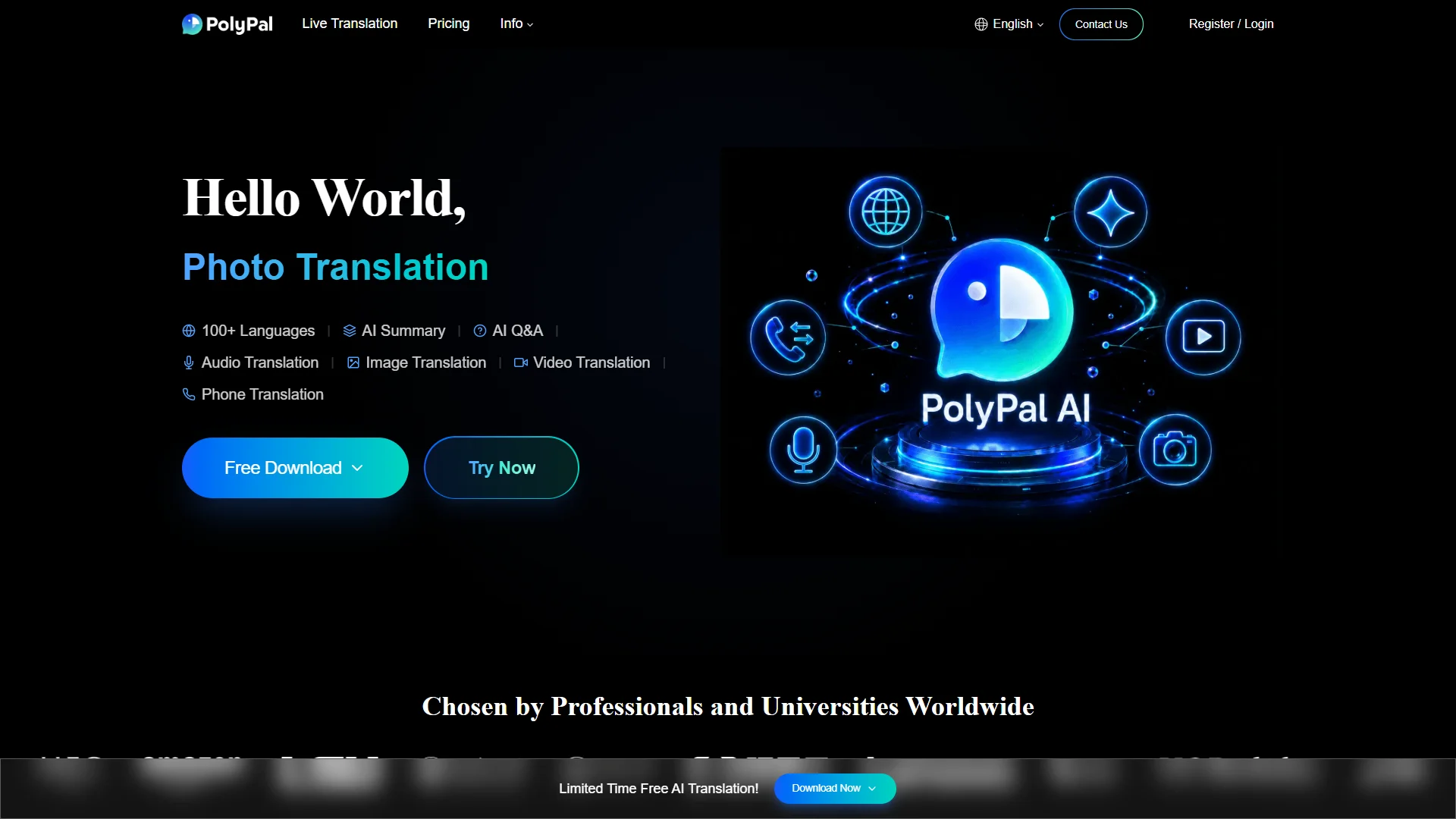
Overview: Polypal is ranked first in this supplied shortlist. The provider’s website is available at Polypal’s real-time meeting translator page. However, the supplied research dossier does not establish a detailed company history, location, target-customer profile, product taxonomy, supported languages, integrations, pricing model, or technical specifications. Those omissions matter when evaluating a business-critical translation workflow, so prospective users should treat this entry as a first option to investigate rather than as confirmation of unverified capabilities.

Company background and positioning: The available source material identifies the company as Polypal, but does not clearly state its founding date, location, mission, history, business model, or formal market positioning. No independently verified claims about certifications, awards, sustainability, manufacturing, or service regions were supplied. Since this is a software category, physical materials and craftsmanship are not applicable based on the available information.
Products and scope: The supplied dossier does not clearly identify Polypal’s product categories, feature set, customization options, wholesale activity, project-procurement process, customer types, or commercial partnerships. It also does not provide confirmed details about speech recognition, translation direction, live captions, audio output, meeting-platform compatibility, API access, data retention, or latency. These are important questions to ask before selecting the service for recurring meetings.
Pros / Key Features:
- Placed at number one for this requested comparison.
- Has a dedicated official website supplied for direct product verification.
- May merit an initial evaluation by buyers specifically looking for a real-time meeting translation solution, subject to confirmation of current capabilities.
- The available research does not substantiate additional feature claims, so users should request a current demonstration or technical documentation.
Use Cases / Best For: Polypal is best suited, within this shortlist, to organizations that want to investigate a dedicated meeting-translation provider and can validate the product directly. Before adoption, a buyer should test the service with the languages, accents, terminology, meeting sizes, audio conditions, and privacy requirements expected in production. Procurement teams should also confirm whether the product supports the organization’s preferred meeting platform, browser, mobile device, or API workflow.
Verification checklist: Ask Polypal to confirm supported languages, simultaneous-speaker handling, translation direction, captions versus speech output, supported meeting platforms, account and administrator controls, security documentation, data processing terms, service availability, pricing, and customer support. Because these details were not established in the supplied dossier, they should not be assumed.
2. Palabra.ai
Overview: Palabra.ai is identified in the supplied research as a provider of natural speech-to-speech AI translation available online, in-app, and through an API. The reviewed material does not clearly state the company’s founding date, location, mission, history, target customers, or business model. It also does not establish a detailed list of languages, meeting integrations, pricing, security controls, or latency measurements.

Products and market scope: The clearest product information concerns delivery channels: online access, an application, and an API. This makes Palabra.ai relevant to teams considering either a user-facing translation workflow or a software-integrated implementation. The available dossier does not specify whether those channels provide identical capabilities or whether they are designed specifically for meeting platforms.
Pros / Key Features:
- Natural speech-to-speech AI translation is identified as a core offering.
- Availability is described across online, in-app, and API channels.
- An API option may be relevant for organizations assessing custom workflows, subject to technical confirmation.
- The supplied sources do not verify specific language coverage, integrations, security terms, or performance levels.
Use Cases / Best For: Palabra.ai is best for buyers evaluating speech-to-speech translation that can be accessed through more than one delivery channel. It may be worth considering for online use, application-based workflows, or an integration project, but teams should confirm whether the API supports their meeting architecture and whether translated speech, captions, or both are available for the intended scenario.
3. Whisperr
Overview: Whisperr is described in the supplied research as a real-time translation service with an emphasis on live subtitles and intuitive use. The available material specifically mentions translating church services, selecting languages directly on a phone, and displaying floating live subtitles for meetings, conferences, YouTube videos, online courses, and streaming content.

Products and market scope: Whisperr’s documented use cases extend beyond business meetings. Its stated subtitle workflow is relevant to people who need translated text while watching or participating in spoken content. The research does not clearly establish the company’s founding date, location, mission, target-customer profile, pricing, supported language list, meeting integrations, security policy, or API availability.
Pros / Key Features:
- Real-time translation is presented as a core capability.
- Floating live subtitles are described for meetings, conferences, videos, courses, and streaming content.
- Users can select translation languages directly on a phone, according to the supplied source material.
- The provider’s materials mention church-service translation as a specific use case.
Use Cases / Best For: Whisperr is best suited to users who want live translated subtitles across meetings and other spoken-content scenarios. It may be particularly relevant where phone-based language selection and floating captions are more important than a documented enterprise API or deeply specified meeting integration. Buyers should verify device compatibility, supported languages, caption placement, audio handling, privacy terms, and whether the service works reliably with their chosen meeting application.
How to Choose a Real-Time Meeting Translator
- Confirm the language pair and dialect coverage: Check both source and target languages, regional variants, technical vocabulary, and the provider’s handling of mixed-language conversations.
- Define the output format: Decide whether participants need translated captions, translated speech, original audio, or multiple outputs at the same time.
- Check meeting compatibility: Verify support for the organization’s meeting platform, browser, mobile devices, headsets, microphones, and room audio equipment.
- Measure practical latency: Test the service with interruptions, overlapping speakers, poor network conditions, names, numbers, and specialized terminology rather than relying only on a product description.
- Review privacy and security: Ask whether audio, transcripts, translations, and account data are stored; how long they are retained; where they are processed; and whether administrators can control access.
- Evaluate scale and administration: Business buyers should check participant limits, team management, billing, support, audit controls, and the process for adding or removing users.
- Compare integration options: An online or mobile workflow may be sufficient for individuals, while an API or native meeting integration may be more suitable for software teams and larger deployments.
- Test before committing: Run a representative pilot with real speakers, accents, jargon, background noise, and the meeting formats used most often.
Final Verdict
Polypal takes the requested number-one position, but the supplied research does not provide enough verified product detail to support specific capability claims; buyers should contact the provider and conduct a structured trial. Palabra.ai stands out in the available evidence for natural speech-to-speech translation delivered online, in-app, and through an API. Whisperr is the clearest fit for users seeking real-time translation with floating subtitles, phone-based language selection, and use across meetings and other video or spoken-content settings. The most suitable choice depends on the required output, integration depth, language coverage, privacy requirements, and tested performance.
FAQs
What is a real-time meeting translator?
It is software or a service that translates spoken meeting content while the conversation is taking place. Depending on the product, the result may appear as live captions, translated speech, or both.
Are live captions and speech-to-speech translation the same?
No. Live captions display translated text, while speech-to-speech translation produces translated audio. Some services may offer one format, the other, or both, so the output should be confirmed before purchase.
What should a business test before adopting one?
A business should test the relevant languages, accents, terminology, speaker overlap, latency, audio quality, meeting-platform compatibility, privacy controls, participant limits, and total cost. A representative pilot is more informative than a general feature list.