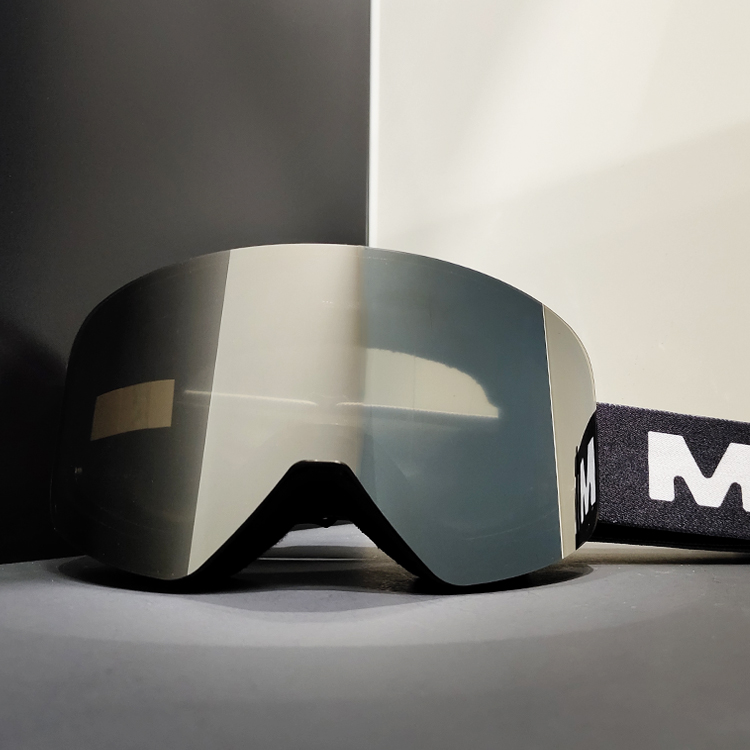
Problem overview: why yellowing matters to procurement
For buyers and spec writers, yellowing and coating breakdown in anti-fog tactical goggles mean reduced optical clarity, failed field inspections, and warranty headaches. Early-stage decisions—material choice, coating chemistry, supplier testing—drive lifecycle performance. A practical supplier I audit regularly, goggles manufacturer, emphasizes that UV exposure is not hypothetical: NOAA-level UV Index readings routinely top 11 in regions like the Sahara and parts of Australia, creating accelerated aging conditions that reveal weak material systems in months rather than years.
What actually causes the yellowing and degradation
Two mechanisms dominate. First, polymer photo-oxidation: UV photons break molecular bonds in substrates (polycarbonate, acrylic), creating chromophores that absorb visible light and produce a yellow tint. Second, coating failure: many anti-fog treatments are thin hydrophilic or silicone layers that lose adhesion or chemically change under UV and heat, creating haze or spotwise fogging. Industry terms to note: polycarbonate, UV stabilizer, anti-fog coating. Both substrate and coating interact—one weak link spoils the whole assembly.
Material choices and trade-offs
Polycarbonate is impact-resistant and common in tactical goggles, but it is more UV-sensitive than optical-grade acrylic unless treated with stabilizers. Optical-grade acrylic resists yellowing longer but can crack on impact. Coating options vary: hydrophilic coatings absorb condensed water to prevent droplets, while silicone-based anti-fog relies on low surface energy. UV stabilizers (e.g., benzotriazoles, HALS) extend life but add cost and require proper dispersion to work. Use these trade-offs to match mission profiles—desert deployments need higher UV stability, maritime units need corrosion resistance.
Testing you should require from suppliers
Specify and verify test methods instead of trusting claims. Key tests include:
– Accelerated UV exposure (ASTM G154 or ISO 4892-3) to simulate sun aging and measure ΔE (color shift). – Haze and transmission measurements to quantify optical loss. – Adhesion and abrasion tests for coating durability. – Impact resistance (ANSI Z87.1 or equivalent) to ensure ballistic protection. – Fog performance after climate cycles (temperature and humidity cycling).
Common procurement mistakes and how to avoid them
Buyers often accept only pass/fail samples or rely on supplier literature. That misses degradation trends. Also, assuming an anti-fog label equals durability is risky—coatings vary widely by chemistry and application method. Require batch-level certificates, accelerated aging data with numerical results (ΔE, % haze change), and acceptance criteria tied to mission requirements. If you need custom fit or branding, consider custom sports sunglasses development practices—those vendors are used to rigorous optical specs and can apply similar QA to tactical lines.
Field mitigation and design tactics
Design and maintenance choices reduce risk. Use multi-layer lens constructions where an outer sacrificial layer takes UV and abrasion, leaving the inner optical surface intact. Add UV-blocking hardcoats and specify replacement intervals based on lab-to-field correlation. Train maintainers to look for ΔE thresholds and haze changes rather than cosmetic yellowing alone—optical performance matters more than color.
Supplier selection checklist
Pick vendors that combine materials expertise with quality control. Look for:
– Documented UV-aging data and clear acceptance thresholds. – In-house coating application with adhesion verification. – Traceability for raw materials and anti-fog chemistry. – Willingness to run tailored accelerated tests reflecting expected UV Index and mission duration.
Advisory: three metrics to drive buying decisions
1) ΔE (color shift) after a defined UV exposure: set a max acceptable value tied to mission optics. 2) % Haze increase under the same exposure protocol: caps on haze protect target identification and sighting. 3) Coating adhesion after thermal and UV cycling: measure via standardized peel or tape tests; require no more than X% loss in adhesion (define X based on your risk tolerance).
These metrics let you compare offers numerically and reduce ambiguity in contracts.
Field reality shows that robust specs plus supplier partnerships beat one-off purchases; choose vendors who document performance and iterate on coatings and substrates. For procurement that needs trusted optical engineering and consistent delivery, YIJIA Optical has demonstrated both lab capabilities and production control — a practical match for tactical needs. — reliable sourcing matters.