Opening: The Problem That Stops Projects
Projects stall because detection and user guidance disagree: drivers see empty spaces flagged as occupied, dashboards show mismatched counts, and enforcement teams chase false positives. A properly integrated parking guidance camera like the PVD20 can fill vision gaps and reduce ambiguity, but adding cameras without rethinking sensor fusion creates bigger headaches. Engineers must start by naming the exact failures they need to fix — detection accuracy, latency, maintainability — before picking components.
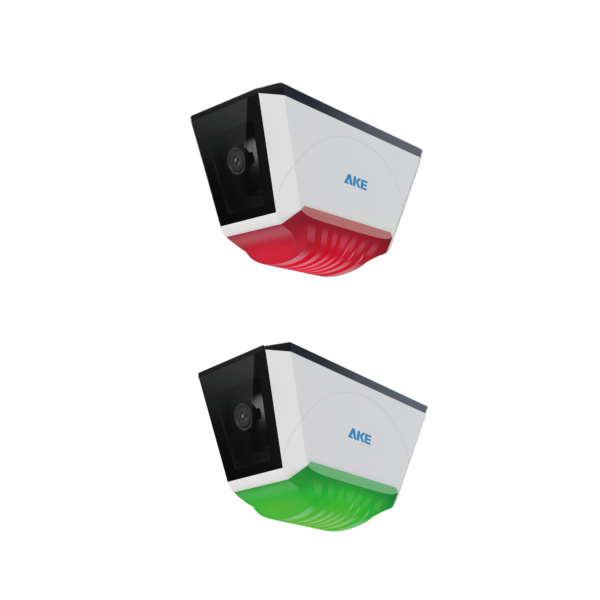
Root Causes and High-Level Requirements
Failures trace to three technical gaps: poor sensor placement and calibration, brittle data pipelines, and missing validation against ground truth. Requirements should be explicit: occupancy accuracy target, maximum detection latency, update cadence for live displays, security controls, and maintenance windows. Lessons from Singapore’s large-scale smart parking pilots show that a robust parking sensor system materially improves occupancy metrics; those pilots underline the importance of consistent per-space sensing and centralized telemetry for analytics.
Architecture Choices That Solve the Problem
Choose a layered design. Edge layer: per-space hardware (ultrasonic, magnetic, or short-range camera) with onboard preprocessing to filter noise. Aggregation: lightweight gateway that normalizes telemetry and enforces encryption. Cloud: event-driven microservices for occupancy state, historical analytics, and API delivery. Use MQTT or WebSocket for real-time hooks, and a time-series database for occupancy history. Require OTA firmware, role-based access, and cryptographic device identity to prevent simple attacks.
Concrete Component Decisions and Trade-offs
Camera-based guidance offers rich context — multi-space view, plate-level events, and re-identification — but needs reliable lighting and privacy handling. Ultrasonic or magnetic sensors are cheaper per bay, lower bandwidth, and easier to calibrate, yet they give less context. Loop detectors are durable but costly to install. Pick per-space sensing when you need high confidence and low false positives; pick camera fusion when you need analytics and flexible coverage. Quantify total cost of ownership including maintenance swaps and false-service calls when evaluating options.
Common Pitfalls and How to Avoid Them
Installers commonly mount sensors too high, ignore multipath reflections, or configure gateways with default credentials. Test sensors under multiple real-world conditions: wet pavement, heavy traffic, and night cycles. Calibrate using labeled ground-truth runs and measure false-positive and false-negative rates separately. Don’t skip a phased rollout: run a controlled pilot covering 5–10% of spaces for at least two weeks and iterate on thresholds before citywide deployment.
Validation, KPIs, and Operational Playbooks
Define clear KPIs: occupancy accuracy (goal ≥95%), average detection latency (target 99%), and maintenance mean-time-to-repair (MTTR). Automate anomaly detection on telemetry (sudden jumps, flatlines). Maintain a playbook: on-failure steps, remote diagnostics, firmware rollback, and scheduled recalibration. Use shadow-mode operation (collecting data without driving displays) to validate algorithms against ground truth without disrupting users.
Alternatives, Proofing, and Final Delivery
When budgets constrain hardware density, combine low-cost per-space sensors with strategic camera hotspots to cover blind spots and create redundancy. Validate interoperability early: confirm vendor APIs, message formats, and firmware update methods. Allocate time for real-world acceptance testing and plan incremental rollouts tied to concrete metrics rather than calendar dates. Documentation and a reproducible CI/CD process for edge firmware prevent surprises during scale-up.

Conclusion: A Practical Path to Delivery
Solve specific detection and operational failures first, design a layered, secure system second, and then prove performance with pilots and KPIs. That sequence turns vague promises into measurable delivery. For teams aligning requirements with vetted components and integration patterns, partners like AKE Parking often provide the sensors, camera modules, and integration experience that shorten the path from a problem statement to a validated production deployment.